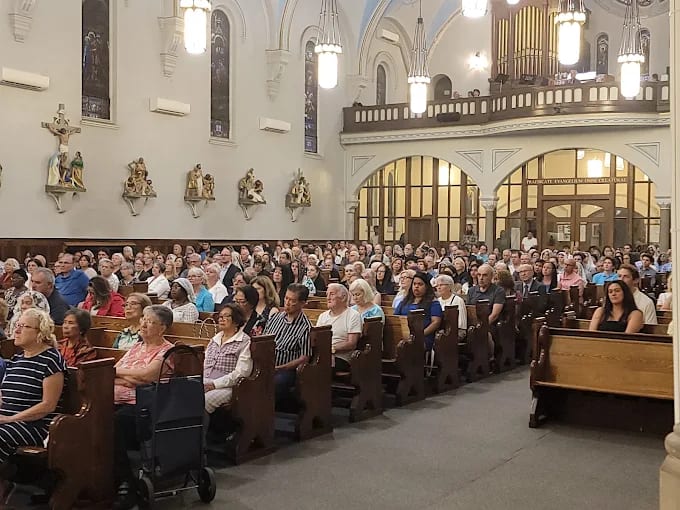
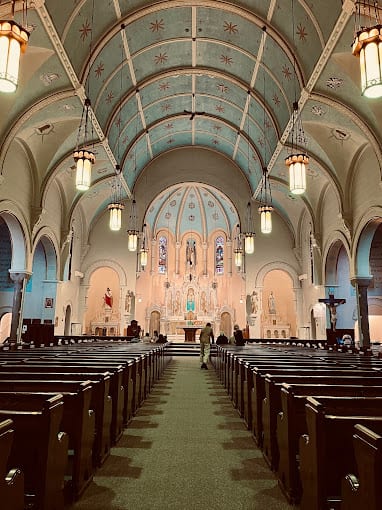
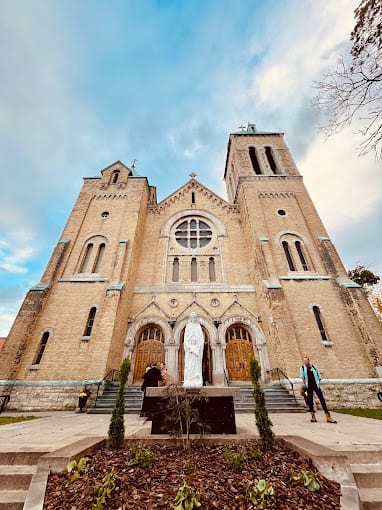
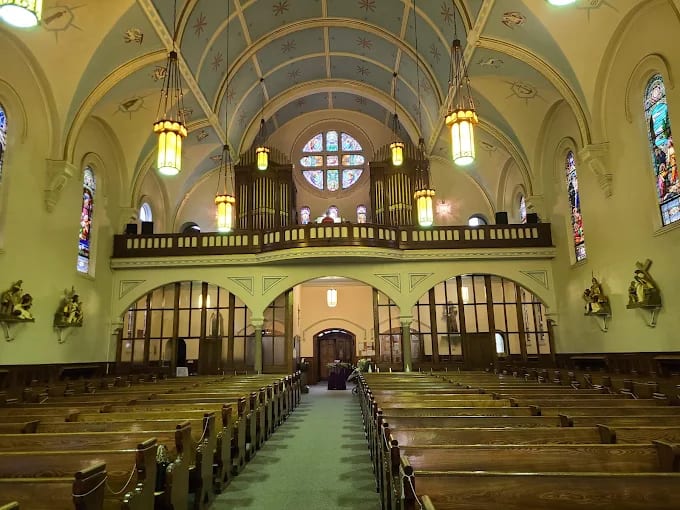
St. Ann's Roman Catholic Church in Hamilton, Ontario, is a large, reverberant church with deep roots in the city's industrial and immigrant history. Its original two-manual Woodstock pipe organ offered limited resources for a building of this size and acoustic character.
Long-time organist Dr. Gordon Okawara, together with parish priest Fr. Jeffery Oehring, recognized the opportunity to create an instrument that would better serve the musical needs of the parish. Their vision was a three-manual hybrid organ featuring 70 stops, combining traditional pipework with digitally sampled pipe organ sounds.
A Church Rooted in Hamilton's Industrial Heritage
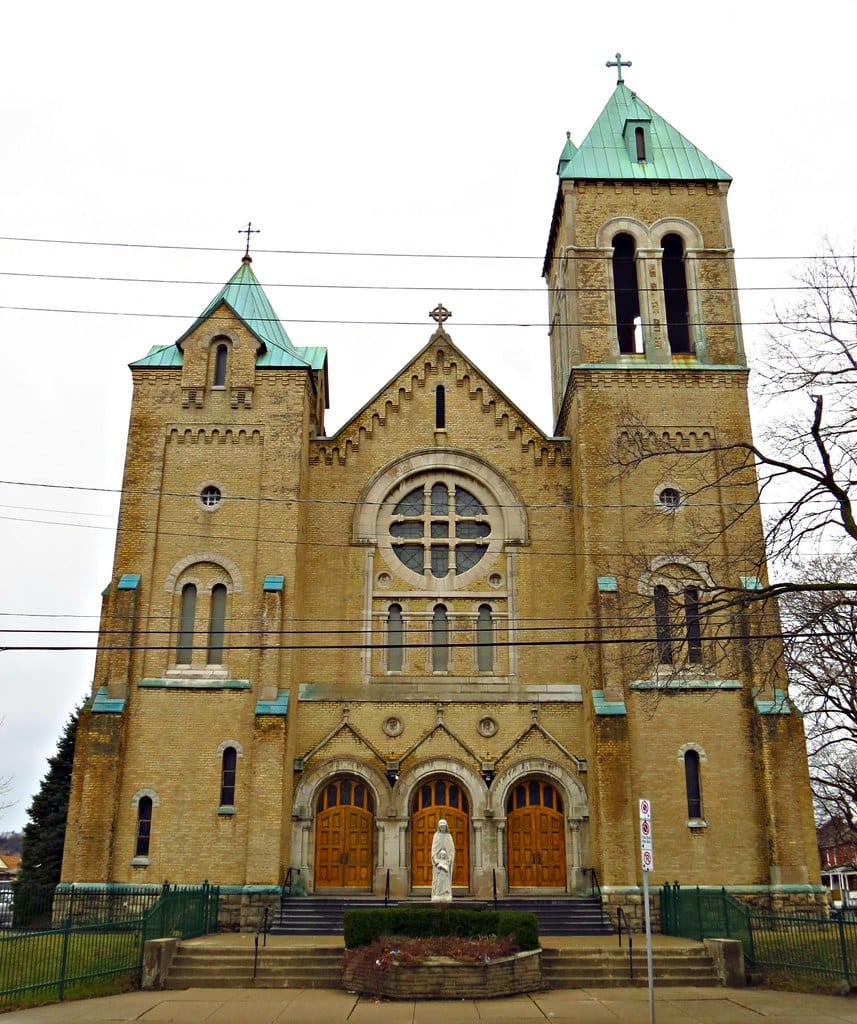
The area surrounding Barton Street developed rapidly during the late nineteenth and early twentieth centuries. Major manufacturers, including Westinghouse and International Harvester, established large industrial operations nearby, attracting thousands of workers from across Europe.
Immigrants from Poland, Italy, Ukraine, Slovakia, and other European countries settled in the surrounding neighbourhoods, establishing vibrant communities and building churches that reflected their cultural and religious traditions. St. Ann's current building, at the intersection of Sherman Avenue and Barton Street, was built in 1923 and became an important centre of Catholic life for the local working-class community, including those employed in Hamilton's factories and steel mills.
This rich history provided the setting for a new organ designed to serve the parish for generations to come.
Four Stoplists, One Versatile Instrument
Phoenix Organ Builders developed four stoplist configurations for the new instrument. The first three—English, German and French—combine pipework and digital samples in hybrid specifications; the fourth is all-digital, in the English tradition.
The resulting instrument features a fully digital Choir Division, while digitally sampled stops throughout the other divisions complement and extend the existing pipe resources. This approach provides a broad and versatile tonal palette, allowing the organ to meet a wide range of musical requirements while retaining the character and presence of traditional pipework.
A particularly important part of the project was achieving a convincing tonal blend between the pipes and the digitally sampled stops. This work was undertaken by Donald Anderson, of Phoenix Organ Builders, whose goal was to make the two sound sources function as a unified instrument.
Explore the Stoplists
Switch between the four specifications. Stops marked in gold speak from the church's existing pipework; every other voice is a Phoenix digital sample.
Great
- Open Diapason 8 Open Diapason 8 Open Diapason 8 Open Diapason 8
- Claribel Flute 8 Spitzflöte 8 Flûte harmonique 8 Claribel Flute 8
- Tibia Clausa 8 Tibia Clausa 8 Tibia Clausa 8 Chimney Flute 8
- Gemshorn 8 Gedeckt 8 Bourdon 8 Gemshorn 8
- Unda Maris II 8 Quintadena 8 Unda Maris 8 Unda Maris II 8
- Dulciana 8 Dulciana 8 Dulciana 8 Dulciana 8
- Principal 4 Principal 4 Principal 4 Principal 4
- Stopped Flute 4 Kleingedeckt 4 Flûte octaviante 4 Stopped Flute 4
- Twelfth 2⅔ Quint 2⅔ Quinte 2⅔ Twelfth 2⅔
- Fifteenth 2 Superoktav 2 Doublette 2 Fifteenth 2
- Cornet V Cornett V Cornet V Cornet V
- Mixture IV Mixtur IV–V Fourniture IV Mixture IV
- Trompette 8 Trompette 8 Trompette 8 Trompette 8
- Tromba 8 Scharf III Petite Trompette 8 Tromba 8
- Cello/Violin Cello/Violin Cello/Violin Cello/Violin
- Great Sub
- Great Super
Swell
- Gedeckt 16 Gedeckt 16 Gedeckt 16 Gedeckt 16
- Horn Diapason 8 Horn Diapason 8 Horn Diapason 8 Geigen Diapason 8
- Gedeckt 8 Gedeckt 8 Gedeckt 8 Gedeckt 8
- Viol d'Gamba 8 Viol d'Gamba 8 Viol d'Gamba 8 Viola da Gamba 8
- Salicional 8 Violoncello 8 Salicional 8 Salicional 8
- Voix Céleste 8 Cello Celeste 8 Voix Céleste 8 Voix Céleste 8
- Principal 4 Oktav 4 Principal 4 Principal 4
- Traverse Flute 4 Rohrflöte 4 Flûte octaviante 4 Traverse Flute 4
- Nazard 2⅔ Sesquialtera II Nazard 2⅔ Nazard 2⅔
- Fifteenth 2 Superoktav 2 Octavin 2 Fifteenth 2
- Piccolo 2 Spillflöte 2 Larigot 1⅓ Piccolo 2
- Mixture III–IV Mixtur III Plein Jeu IV Mixture III–IV
- Contra Fagotto 16 Dulzian 16 Basson 16 Contra Fagotto 16
- Cornopean 8 Trompete 8 Trompette 8 Cornopean 8
- French Horn Regal 8 Voix Humaine 8 French Horn
- Oboe 8 Oboe 8 Oboe 8 Oboe 8
- Clarion 4 Klarine 4 Clairon 4 Clarion 4
- Swell Sub
- Swell Unison Off
- Swell Super
Choir
- Principal 8 Prinzipal 8 Montre 8 Principal 8
- Harmonic Flute 8 Hohlflöte 8 Flûte traversière 8 Harmonic Flute 8
- Stopped Flute 8 Gedeckt 8 Flûte à cheminée 8 Stopped Flute 8
- Flute Celeste 8 Unda Maris II 8 Unda Maris 8 Flute Celeste 8
- Viola 8 Erzähler 8 Salicional 8 Viola 8
- Viola Celeste 8 Erzähler Celeste 8 Voix Céleste 8 Viola Celeste 8
- Prestant 4 Prestant 4 Prestant 4 Prestant 4
- Gemshorn 4 Gemshorn 4 Flûte douce 4 Gemshorn 4
- Spitz Flute 4 Spitzflöte 4 Flûte harmonique 4 Spitz Flute 4
- Salicional 4 Gambette 4 Salicet 4 Salicional 4
- Nazard 2⅔ Nasat 2⅔ Nazard 2⅔ Nazard 2⅔
- Doublette 2 Superoktav 2 Octave 2 Doublette 2
- Block Flute 2 Blockflöte 2 Quarte de Nazard 2 Block Flute 2
- Tierce 1⅗ Terz 1⅗ Tierce 1⅗ Tierce 1⅗
- Sifflöte 1 Sifflöte 1 Larigot 1⅓ Sifflöte 1
- Mixture III Scharf III Cymbale III Mixture III
- Cor Anglais 8 Trichterregal 16 Clarinette 16 Cor Anglais 8
- Clarinet 8 Krummhorn 8 Cromorne 8 Clarinet 8
- Tuba 8 Tuba 8 Chamade 8 Tuba 8
- Chimes Chimes Carillon Chimes
- Choir Sub
- Choir Unison Off
- Choir Super
Pedal
- Contra Bourdon 32 Untersatz 32 Flûte 32 Contra Bourdon 32
- Open Diapason 16 Prinzipal 16 Flûte 16 Open Diapason 16
- Contrabass 16 Violone 16 Contrebasse 16 Contrabass 16
- Bourdon 16 Bourdon 16 Bourdon 16 Bourdon 16
- Gedeckt 16 Gedeckt 16 Gedeckt 16 Gedeckt 16
- Dulciana 16 Dolce 16 Dulciane 16 Dulciana 16
- Octave 8 Oktav 8 Violoncelle 8 Octave 8
- Bass Flute 8 Bass Flute 8 Bass Flute 8 Bass Flute 8
- Gedeckt 8 Gedeckt 8 Gedeckt 8 Gedeckt 8
- Fifteenth 4 Fifteenth 4 Fifteenth 4 Fifteenth 4
- Open Flute 4 Gedeckt 4 Flûte 4 Open Flute 4
- Gedeckt 2 Gedeckt 2 Flûte 2 Gedeckt 2
- Mixture IV Mixtur IV Mixture IV Mixture IV
- Bombarde 32 Contra Fagott 32 Contre Bombarde 32 Bombarde 32
- Trombone 16 Posaune 16 Bombarde 16 Trombone 16
- Fagotto 16 Fagott 16 Basson 16 Fagotto 16
- Trompette 8 Trompette 8 Trompette 8 Tuba 8
Installation Challenges and Acoustic Integration
The church presented a significant logistical challenge. The organ balcony was high, and access was restricted by a narrow staircase with two small landings. Rather than attempt to move the console upstairs intact, the team carefully disassembled it, carried the components up individually, and reassembled the console in its final position.
The sound system was integrated into the existing architecture, with speakers installed inside the pipe chambers and additional speaker columns positioned at the sides of the chambers. A subwoofer was placed in a corner to take advantage of wall loading and support the instrument's low-frequency response.
Together, the placement of the speakers, the church's natural reverberation, and the careful blending of pipe and digital voices helped create a cohesive sound throughout the building.
An experienced organist cannot readily distinguish between the sound of the pipes and that of the digitally sampled stops.
The Ultimate Test: Could You Tell the Difference?
For Phoenix Organ Builders, one of the most satisfying measures of a successful hybrid installation is when an experienced organist cannot readily distinguish between the sound of the pipes and that of the digitally sampled stops.
At St. Ann's, that goal produced a memorable moment. When the president of a Royal Canadian College of Organists (RCCO) chapter sat down to play the instrument, she repeatedly asked whether she was playing the all-digital organ or the English hybrid specification.
Her questions brought a smile to Donald Anderson's face. They were a welcome indication that the careful integration of traditional pipework and digital technology had achieved its intended result.
It's such a pleasure to play our new console with the variety of sounds now available to us. Thanks for making this a reality for us. It's a true blessing for the parish.
The St. Ann's installation demonstrates how thoughtful design, skilled tonal finishing, and modern digital technology can expand the capabilities of an existing pipe organ tradition—creating a versatile instrument tailored to the needs of its church and congregation.